A Genealogy of the Concentration Camp
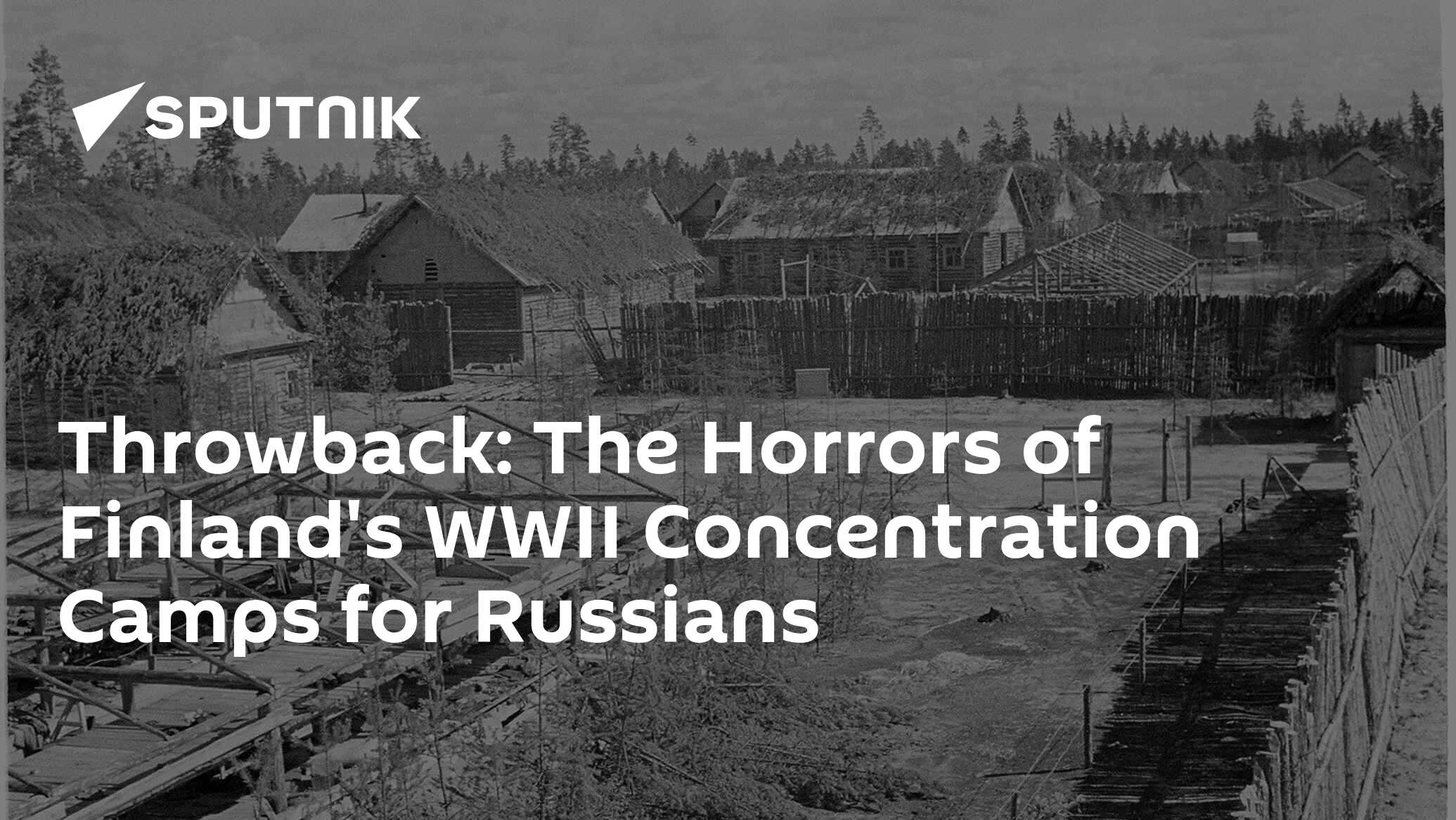
Sputnik ran an article today on Finland’s WWII camps:
https://sputnikglobe.com/20260117/throwback-the-horrors-of-finlands-wwii-concentration-camps-for-russians-1123477872.html
Curious about the history of the concentration camp I worked with ChatGPT to study its circumstances and origins: why did camps of this kind appear when they did, why did they resemble one another across regimes, and why are they a distinctly modern phenomenon.
A genealogical approach, rather than a moral or national one, lets us see this more clearly.
I. The Camp Is Not Timeless
It is tempting to imagine that camps are simply an ancient form of cruelty, recurring whenever power becomes brutal. That view is wrong.
Pre-modern societies practiced:
slavery
exile
massacre
imprisonment
forced labor
But they did not practice concentration in the modern sense.
What they lacked was:
large-scale population measurement
bureaucratic classification
racialized civil categories
logistical systems capable of sustaining mass civilian detention
scientific languages that rendered entire populations legible as problems
The concentration camp is therefore not ancient cruelty reborn.
It is a recent administrative invention.
II. Preconditions: What Must Exist Before Camps Become Thinkable
The camp becomes possible only after three discourses converge.
1. Statistical and Administrative Science
By the late 19th century, states had acquired:
censuses
registries
identity papers
population tables
nutritional science
epidemiology
This produces a decisive shift:
populations become objects that can be managed, not merely ruled.
A camp is impossible without the belief that human groups can be:
counted
categorized
rationed
relocated
“maintained” at scale
Without this administrative rationality, camps collapse into massacres or expulsions.
With it, they become institutions.
2. Racial and Civilizational Discourse
Equally crucial is the rise of scientific race thinking.
By the early 20th century, states increasingly spoke of populations as:
ethnically distinct
biologically different
culturally incompatible
civilizationally ranked
This matters because camps are not built for enemies as such, but for:
populations deemed temporarily incompatible with the polity.
In the Finnish case discussed in the article, Russians in East Karelia were:
civilians
non-combatants
but classified as ethnically and politically suspect
This is the key distinction:
not criminals
not prisoners of war
not citizens
The camp emerges precisely to house people who fall between categories.
3. Total War and Civilian Suspicion
Finally, camps require total war.
Total war collapses:
civilian vs military
home front vs battlefield
loyalty vs identity
Once war is framed as existential, populations themselves become threats.
At that point the question becomes:
“What do we do with civilians we cannot trust, integrate, or feed?”
The camp answers that question bureaucratically.
III. Why Camps Suddenly Proliferate in the 20th Century
Seen genealogically, camps appear almost simultaneously across empires and ideologies:
British camps in the Boer War
Spanish reconcentración in Cuba
German camps (colonial, then domestic)
Soviet labor and settlement camps
Finnish camps in East Karelia
American internment of Japanese civilians
This simultaneity is not coincidence.
It reflects the moment when:
science
race discourse
bureaucratic administration
and total war
converge into a single governing rationality.
That is why these camps “mirror” one another even when intentions differ.
IV. Finland as a Case Study, Not an Exception
The Sputnik article wants Finland to appear uniquely culpable.
Finnish nationalist narratives want Finland to appear uniquely restrained.
Genealogy rejects both.
What Finland demonstrates is something more disturbing:
once the camp becomes a normal administrative solution, even reluctant states reach for it.
The Finnish camps were:
not extermination camps
not industrial killing sites
not designed for genocide
And yet:
civilians were segregated
resources were withheld
disease spread
deaths mounted
suffering was normalized as regrettable but necessary
This is not Nazi exceptionalism.
It is modern administrative logic at work.
V. Why Camps Are “Recent” in a Deep Sense
The strongest claim that can be made, and which the article only gestures toward, is this:
Concentration camps could not exist before the modern scientific and racial imagination made them sensible.
They require:
a belief that populations can be engineered
a belief that identity is biologically or culturally fixed
a belief that suffering can be administratively optimized
a belief that death by neglect is morally distinct from killing
These beliefs are not ancient.
They are products of modernity.
VI. The Uncomfortable Conclusion
The genealogy leads to an unsettling realization:
The concentration camp is not the opposite of civilization.
It is one of civilization’s tools.
Once that tool exists, it travels easily:
across borders
across ideologies
across moral self-descriptions
The Finnish case does not indict Finland alone.
It indicts the modern state’s confidence in its own rationality.
And that is why genealogical analysis remains so threatening.
It does not ask:
“Who was evil?”
It asks:
“When did this begin to make sense?”
And once that question is asked, the answer implicates far more than any single country, war, or regime.