



TheGaggle
Politics • Culture • News
Our community is made up of those who value the freedom of speech, the right to debate and the promise of open, honest conversations.

We don't agree on everything but we never silence our followers and value every opinion on our channel.
Interested? Want to learn more about the community?

Hungary’s election has done more than end Viktor Orbán’s 16 years in power. It has also removed what, over the past decade, had become a central organising figure for Europe’s nationalist right.

Orbán’s exit from the European Council will deprive like-minded leaders across the bloc of a figure who played a central role in aligning positions among allied governments. Without that anchor, analysts told me the European far right is likely to become more fragmented and less capable of acting in concert.

Others are unlikely to step into that role. Czechia’s Andrej Babiš and Slovakia’s Robert Fico remain influential at home, but neither has shown the same capacity to organise across borders. As Júlia Pőcze of the Centre for European Policy Studies put it, they lack the “organising power” Orbán once wielded. That leaves his former allies more exposed and less cohesive.

The implications are already visible in Slovenia, where the prospect of a comeback by right-wing populist Janez Janša is now viewed through a more constrained lens. Without Orbán as a gravitational centre, figures such as the former Slovenian prime minister are more likely to be shaped by Europe’s mainstream centre-right than to reshape it, Milan Nič of the German Council on Foreign Relations told me.

For now, Slovenia is navigating uncertain waters. PM Robert Golob’s Freedom Movement secured only a razor-thin lead, but coalition talks have become more fraught after the election of Moscow-friendly politician Zoran Stevanović as speaker of parliament. Stevanović has signalled plans to visit Russia and floated a referendum on Slovenia’s withdrawal from NATO.

Janša’s decision to back Stevanović is “alarming,” liberal Slovenian lawmaker Irena Joveva told me, and it raises questions over the bargains behind Janša’s possible return. “Is this the price that he is paying to come back?” she asked.

President Nataša Pirc Musar is expected to give the mandate to whichever candidate appears most likely to secure 46 parliamentary votes, though neither bloc has a clear path to a majority.

Even so, casting Janša as a successor to Orbán would be a stretch. He is firmly pro-Ukraine, and, while eurosceptic, remains committed to staying within the European People’s Party rather than breaking away from it. Slovenia’s finely balanced parliament would also leave little room for the kind of systemic overhaul Orbán engineered in Hungary.

Orbán is leaving the stage, and with him goes the figure who for years gave Europe’s national right coherence beyond national borders.

Magyar still banned by EPP

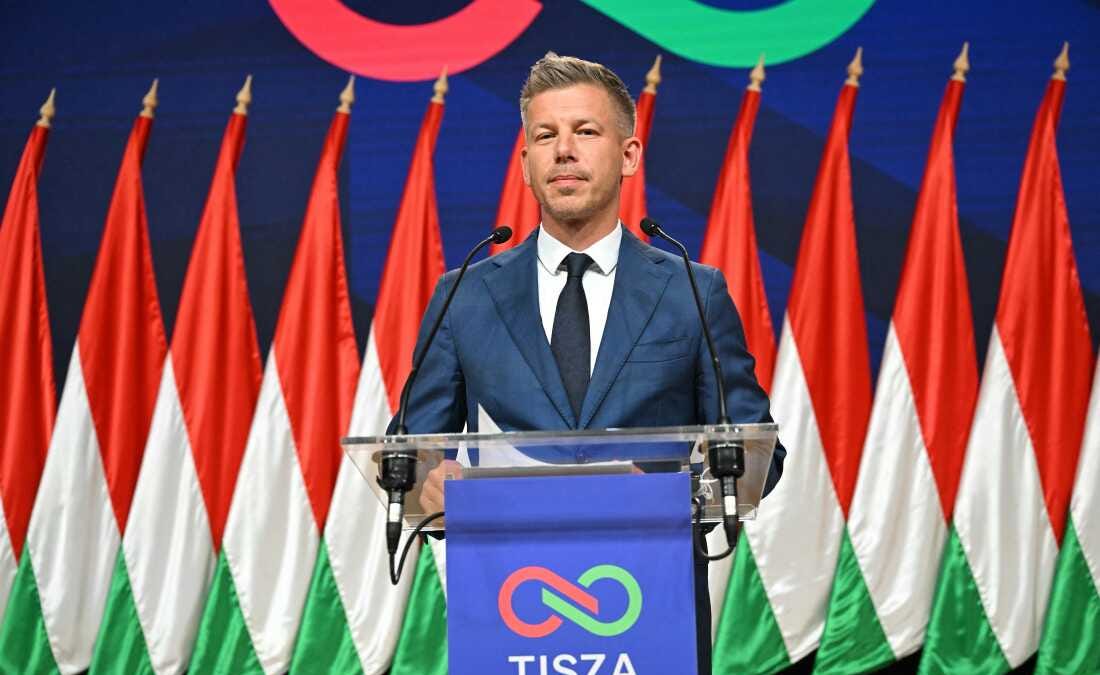
Prime Minister-elect Péter Magyar’s MEPs return to the EPP next week as conquering heroes, but the Hungarian delegation remains barred from speaking for the group. The sanction, imposed by EPP chief Manfred Weber in January, followed Tisza’s refusal to defend the European Commission during a far-right no-confidence motion.

The ban runs until late July, meaning they will still be sidelined if Hungary comes up on the agenda later this month – as the Greens are expected to request. Read Eddy’s full story.

Interested? Want to learn more about the community?
What else you may like…
Videos
Posts
Articles
Monday Night At The Movies: "The Adventures of Baron Munchausen" (1988)

Join Gagglers for "The Adventures of Baron Munchausen" (1988)"!
The screening starts at 3 p.m. ET sharp.
Share all of your thoughts, comments and criticisms on the Live Chat.

See you at 3 p.m. ET

02:06:28
TG 2101: After Islamabad, Trump Threatens Hormuz Blockade

George Szamuely and Peter Lavelle discuss the surprising aftermath of the U.S.-Iran negotiations in Islamabad:President Trump's threat to blockade the Straits of Hormuz.

01:24:05
TG 2100: Are The Islamabad Talks A Pretext For A New War On Iran?

George Szamuely and Peter Lavelle discuss the upcoming U.S.-Iran talks in Islamabad, and wonder whether there is any chance of their delivering a peaceful settlement.

01:43:17
Monday Night At The Movies

Please choose which one of the following 8 movies you would like to have screened next Monday, April 13.

The theme is "Liars, the Big Lie and the Lying Liars who Perpetrate Them."

Please continue to vote after April 13, so that we can determine the runner-up. The runner-up will be screened on April 20.

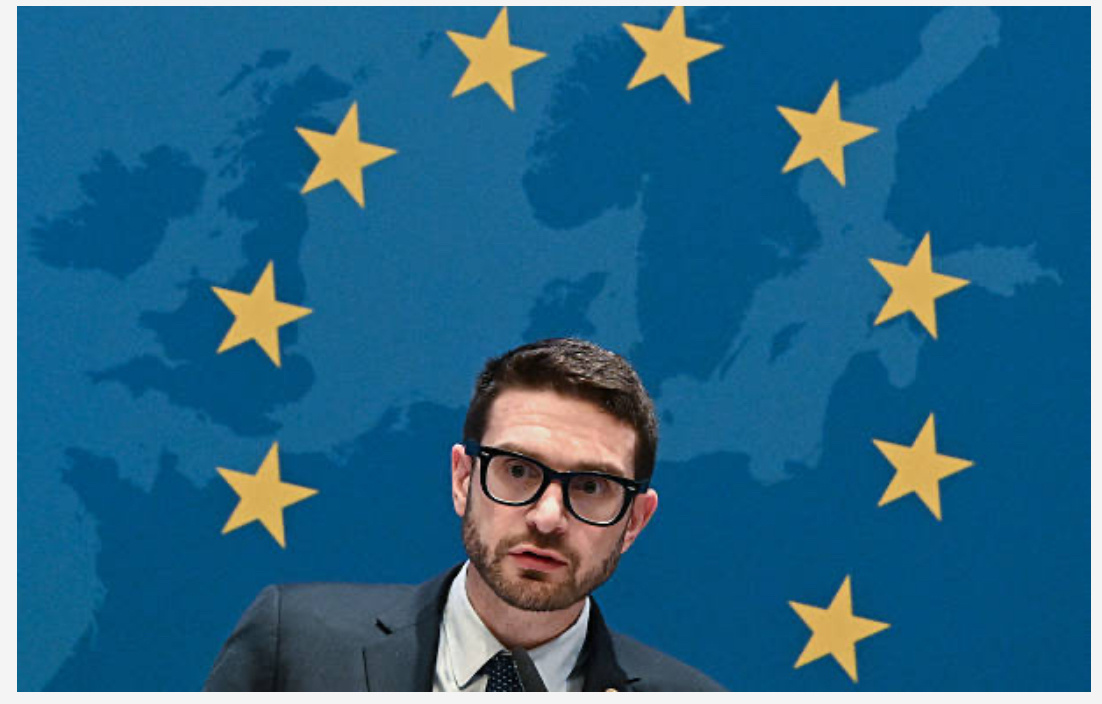
US investor and philanthropist Alexander Soros, son of Hungarian-US investor and philanthropist George Soros, speaks during a ceremony to accept the "2025 Civil Rights Prize of the Sinti and Roma" on behalf of his father, on October 23, 2025 in Berlin, Germany.

post photo preview
January 21, 2023
More Leftie Than Thou
"Jacobin" Magazine Celebrates A Strike Against Ol' Blue Eyes

Here at "The Gaggle" we have very little time for the "more Leftie than thou" school of thought--that's the approach to life according to which the only thing that matters is whether you take the right position on every issue under the sun from Abortion to Zelensky. No one in the world meets the exacting standards of this school of thought; any Leftie leader anywhere is always selling out to the bankers and the capitalists. The perfect exemplar of this is the unreadable Jacobin magazine. 

The other day I came across this article from 2021. It's a celebration of trade union power. And not simply trade union power, but the use of trade union power to secure political goals. Of course (and this is always the case with the "more Leftie than thou" crowd), this glorious, never-to-be-forgotten moment on the history of organized labor took place many years ago--in the summer of 1974 to be exact. Yes, almost half a century has gone by since that thrilling moment when the working-class movement of Australia mobilized and prepared to seize the means of production, distribution and exchange. 

Well, not quite. Organized labor went into action against...Ol' Blue Eyes, the Chairman of the Board, the Voice; yes, Frank Sinatra. Why? What had Sinatra done? Sinatra was certainly very rich, and he owned a variety of properties and businesses. But if the Australian trade union movement were, understandably, searching for the bright, incandescent spark that would finally awaken the working class from its slumber there were surely richer, greedier, more dishonest, more decadent, above all more Australian individuals it could have discovered. Australia was never short of them. Rupert Murdoch immediately springs to mind. Why Sinatra?


 

Only for Supporters
To read the rest of this article and access other paid content, you must be a supporter
Read full Article
See More
Available on mobile and TV devices
google store google store app store app store
google store google store app tv store app tv store amazon store amazon store roku store roku store
Powered by Locals